
Five out of the top 10 companies in Fortune 500 list of Indian companies are from the oil sector.
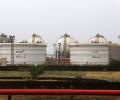
The Essar Oil, Rosneft deal also helped Arpwood Capital, boutique investment bank, co-founded by Rajeev Gupta and Raj Kataria, to grab the second spot in the mergers and acquisitions league table.

US sanctions against Iran kick in from November 4, which will block payment routes. Sources said India and Iran are discussing reverting to rupee trade after November 4.

Petronet India Ltd is likely to formally shelve the Rs 2,450 crore (Rs 24.5 billion) central India petroleum product pipeline project this month as its promoters are no longer keen on the project.\n\n\n\n

India has asked refiners that owe about $6.5 billion to Iran for oil imports to build up dollar and euro balances to avoid downward pressure on the rupee if six world powers and Tehran reach a final nuclear deal.
The domestic supply of diesel has been constrained on rapidly growing demand. The diversion of supplies from Reliance Industries, which was given export-oriented unit status last year, has added to the shortage. Reliance produces 10 million tonnes of diesel from Jamnagar.

Among India's capital-starved local banks, Essar is viewed as too big to fail.

The UAE central bank will then make payments in dirhams to Iran.

Essar Global Fund, the Ruia company that invested $1.3 billion in telecommunications, towers and business process outsourcing over the years, made $6.5 billion, a five-fold return, when it flipped these businesses, according to discussions the group has had with merchant bankers.

While some such as Hindalco, JSW Steel, India Cements, Essar Oil, Tata Steel and Jet Airways have already announced plans to raise a combined Rs 70,000 crore, there are many who are redrawing proposals to enter the market to raise money.
Experts say local demand, government policies in retail and refining sector are attracting foreign players.
Huge oil and gas reserves have been discovered in four districts of Rajasthan, bordering Pakistan, the state government announced on Friday.

Cairn India is 25th on the list with 22.2 per cent CGR.

In November they had raised $2.19 billion from abroad, according to the Reserve Bank data released on Friday.

The committee said the move 'clearly undervalued the company and its long-term growth prospects'.

The private companies want a level playing field so that they can compete with the government companies in fuel retailing.

Mangalore Refinery and Petrochemicals Ltd (MRPL) will double offtake of crude oil from Cairn India's Rajasthan fields to 0.4 million tons this fiscal.

In 2017, a consortium led by Russian state oil company Rosneft agreed to buy Essar Oil for $12.9 billion in India's biggest foreign acquisition of a homegrown company. Rosneft's buyout of Essar's assets was meant to herald a wave of energy investments in India - over six decades after Esso, Caltex and Shell invested in India's refining sector in the 1950s. But the government has tripped up in its efforts to sell Bharat Petroleum Corporation Ltd (BPCL), formerly Burmah Shell, a blue chip public sector company. Bidders include a couple of global funds and resources firm Vedanta.

The government should scrap the windfall profit tax on domestically produced crude oil as the levy is adversely impacting the capex-intensive exploration of oil and gas, the industry said in its recommendation for the forthcoming annual Budget. India first imposed windfall profit taxes on July 1, joining a growing number of nations that tax super normal profits of energy companies. At that time, a Rs 23,250 per tonne ($40 per barrel) windfall profit tax on domestic crude production was levied.

Cover inadequate for even one refinery.
Power Grid Corp of India Ltd is set to form joint ventures with five more companies, including Oil and Natural Gas Corporation and Essar, for setting up transmission lines in the country entailing a total investment of Rs 5,000 crore (Rs 50 billion).
Reliance has shut all of its 1,432 petrol pumps in the country after sales dropped to almost nil as it could not match the subsidised price offered by public sector competition. Public sector currently sells petrol at a loss of Rs 13.97 a litre and diesel at a discount of Rs 20.97 per litre. This revenue loss is made up by the Government through issue of oil bonds. Private firms were not entitled for the subsidy and priced fuel from their pumps at Rs 8-10 a litre higher.
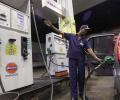
Since May 1, the dynamic fuel pricing model has been applied on a pilot basis in 5 cities

Cross previous high of $72 billion in 2007 as Indian promoters overcome the selling taboo. Abhineet Kumar reports from Mumbai.

Inputs by the Petroleum Ministry were found among stolen documents.

The government freed diesel pricing last October, providing a level playing field to private companies like Reliance and Essar Oil.

Russian firms expand their footprint in India. And take bigger steps to do business with India's private sector.

Low fuel prices to help oil marketing and refining sectors but upstream players will stay under pressure.
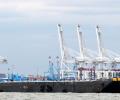
Tehran plans to lift exports by 500,000 barrels per day

The retrospective tax controversy was highlighted by Vodafone, but Cairn Plc's continuing problems point to the impact this law has had on FDI in India's oil and gas sector.
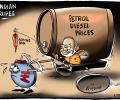
One of the major advantages of buying Iran crude is the additional credit period of 90 days that the country gives to India, compared to 30 days by other countries.

Iran has complained of irregular shipments

A vilification campaign against Rosneft has begun in right earnest, says M K Bhadrakumar.

The government has made it much harder for tycoons to get special dispensations from Delhi

Petroleum Minister Dharmendra Pradhan was to give away the awards but he could not attend because he was travelling.

IOC, the key importer of petrol, has sought almost 700,000 tonnes for March-September delivery.

Fernandes wanted Coca-Cola Company to not just transfer 60 per cent of the shares of its Indian firm but also the formula for its concentrate to Indian shareholders.
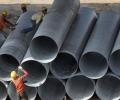
Once Bhushan Steel is into its fold, Tata Steel will increase its capacity from 12.7 million tonnes per annum (mtpa) to 18.3 mtpa
 © 2026 Rediff.com - Advertise with us - Disclaimer - Privacy Policy - Sitemap - Feedback - About us - Terms of use - Grievances